
How to Spot a Failed Breakout
A breakout is a common type of trade that is easy to see, but a filed breakout can be harder to recognize. One type of failed breakout that is easy to see is the Day 2 Reversal. An example occurred on 12 September, after Ubiquiti (UBNT) appeared to successfully breakout.
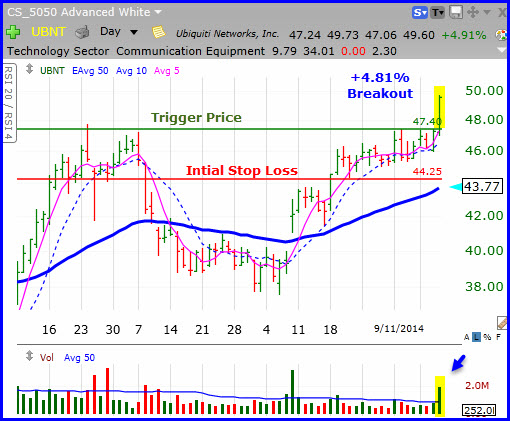
Ubiquiti (UBNT) formed a 7-week cup pattern and traded in a tight range during the last 2 weeks before triggering a breakout above the $47.40 resistance level. The stock broke out on 2-times the average (50-day) volume; higher volume is an important requirement for valid breakouts.
The stock gained $3.32 (+4.81%) by the close on 11 September and showed range expansion, a constructive sign for a breakout. The initial stop loss was placed at $44.25. (see chart below)
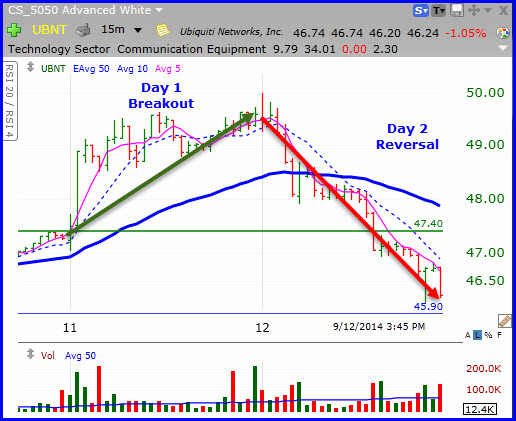
On Day 2, UBNT recorded a new high, but then it quickly began to decline throughout the day in heavy selling volume. The stock fell -6.27% and closed below the low of the breakout bar, a key signal for a failed breakout. Above is a 15-minute chart of the breakout day and the reversal day. Defensive action was taken, and the stop loss was raised to just below the low of the reversal day at $45.90 (see chart above, blue line).
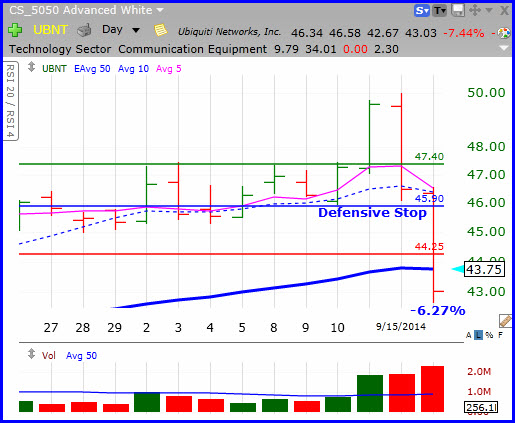
On day 3, UBNT opened above the stop loss price, but then price fell and stopped out the position with a small, -3.16% loss. UBNT continued to decline throughout the day, falling below the initial stop loss price, closing down -7.44% on the day.
It is important to take defensive action once there evidence of a failed breakout. Recognizing the failed UBNT breakout kept the loss on this trade small.
Important Disclaimer:
The information presented in the ProSelect Stock Report is for informational purposes. The information was based on data and charting programs from independent services and CC Trader LLC d/b/a TradeLikeaPro does not guarantee the accuracy of the information used in the analysis of securities presented. The information is not offered as a guide for trading ideas and setups. Investors and traders should conduct their own independent research before making any investment. Nothing contained herein should be construed as an automatic recommendation to buy or sell any listed security. Investing and trading involves risk. Before deciding on any investment, you should consider your investment objectives, level of experience, and risk tolerance. Do not trade with money you cannot afford to lose. You should seek investment advice from a professional investment adviser before engaging in investment activities.
Traders should check numbers for accuracy before relying on them for trading decisions because typographical errors will sometimes occur.
(c) CC Trader LLC d/b/a TradeLikeAPro 2014. All Rights Reserved.